
Introduction
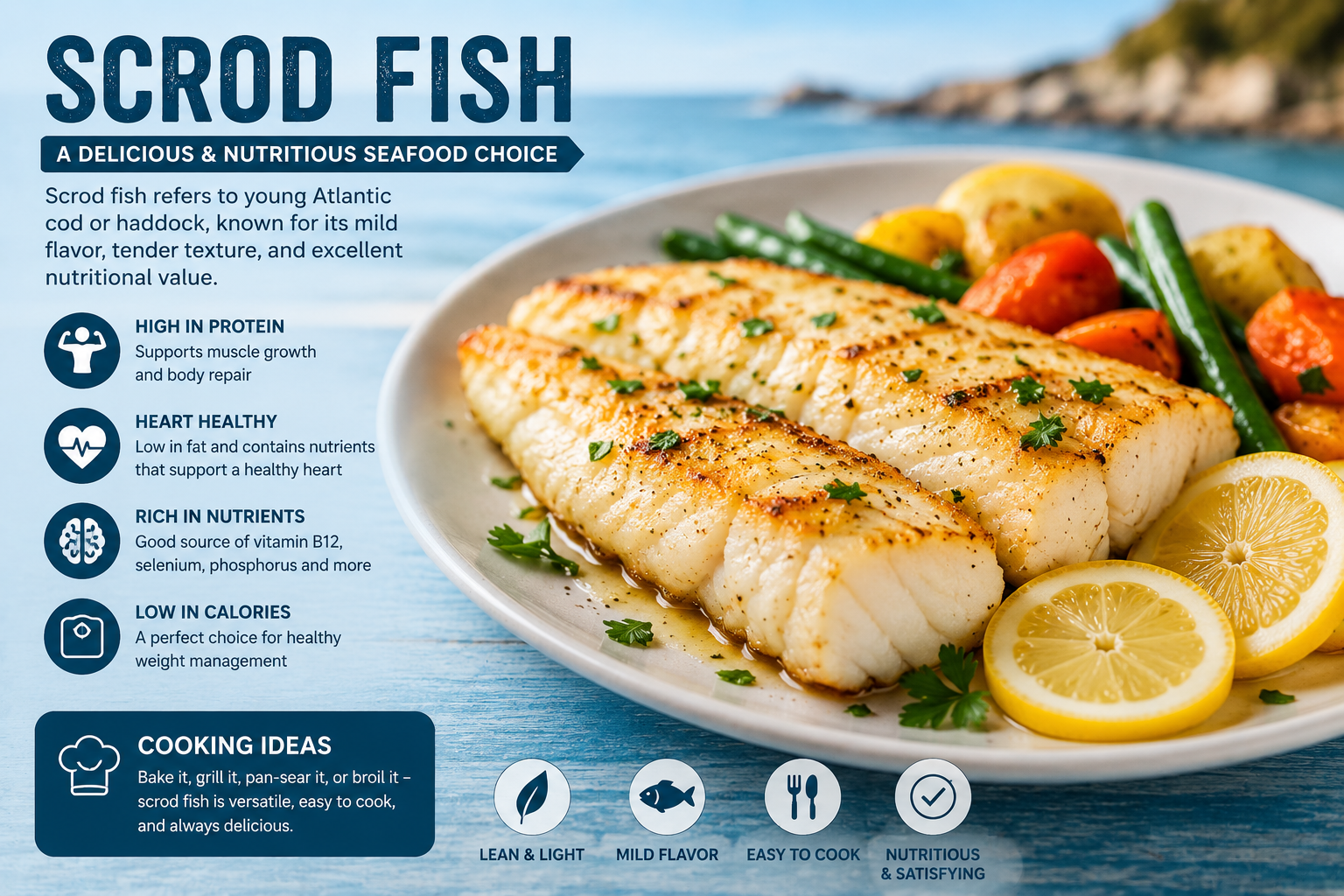
Seafood has long been an essential part of a healthy diet, offering high-quality protein, essential vitamins, and heart-friendly nutrients. Among the many varieties of fish enjoyed around the world, scrod fish remains a popular choice because of its mild flavor, tender texture, and versatility in cooking. Whether baked, grilled, fried, or broiled, scrod fish is appreciated by seafood lovers for its delicate taste and nutritional value.
Many people mistakenly believe that scrod fish is a specific species. In reality, the term “scrod” generally refers to young white fish, most commonly Atlantic cod or haddock, that are small enough to provide tender fillets. The name has been widely used in New England seafood restaurants for generations and continues to be associated with fresh, high-quality seafood.
This article explains what scrod fish is, its nutritional profile, health benefits, cooking methods, and why it remains a favorite among seafood enthusiasts.
What Is Scrod Fish?
This fish is not a separate species of fish. Instead, it is a market term used to describe young white fish, usually Atlantic cod or haddock, before they reach full maturity. Because these fish are harvested while still relatively young, their meat is softer, flakier, and milder in flavor than older fish.
The term is especially common in the northeastern United States, where seafood restaurants often feature fresh scrod fish as a daily special. Depending on the season and availability, restaurants may serve either cod or haddock under the name “scrod.”
Its light texture and subtle flavor make it suitable for people who are new to eating seafood as well as experienced seafood lovers.
Nutritional Value of Scrod Fish
Scrod fish is known for being both nutritious and low in calories. It provides several important nutrients that support overall health.
High in Lean Protein
Protein is essential for building muscles, repairing tissues, and maintaining healthy body functions. this fish offers a generous amount of high-quality protein while remaining naturally low in fat.
Rich in Vitamins
Scrod fish contains several B vitamins, including vitamin B12 and niacin, which help support energy production, brain function, and healthy red blood cells.
Excellent Source of Minerals
Important minerals such as phosphorus, selenium, and potassium are naturally present in this fish. These nutrients contribute to strong bones, proper nerve function, and a healthy immune system.
Low in Calories
For individuals following a balanced diet or weight management plan, this fish is an excellent choice because it delivers valuable nutrients without adding excessive calories.
Health Benefits of Scrod Fish
Supports Heart Health
Scrod fish contains healthy nutrients that contribute to cardiovascular wellness. Regular seafood consumption, as part of a balanced diet, may help support healthy heart function.
Promotes Muscle Growth
The high protein content makes this fish beneficial for athletes, active individuals, and anyone looking to maintain lean muscle mass.
Supports Brain Function
Vitamin B12 and selenium found in this fish play important roles in supporting cognitive health and maintaining a healthy nervous system.
Helps Maintain Healthy Weight
Because it is filling, high in protein, and relatively low in calories, this fish can help individuals stay satisfied while managing their calorie intake.
How to Cook Scrod Fish
One reason this fish remains popular is its versatility in the kitchen. Its mild flavor pairs well with many herbs, spices, and side dishes.
Baking
Baking is one of the healthiest preparation methods. Simply season the fish with lemon, garlic, herbs, and a small amount of olive oil before placing it in the oven.
Grilling
Grilled scrod fish develops a light smoky flavor while maintaining its tender texture. Fresh vegetables and rice make excellent side dishes.
Pan-Seared
Cooking this fish in a skillet creates a lightly crisp exterior while preserving the flaky interior. This method works well with butter, fresh herbs, and citrus.
Fried
Many seafood restaurants serve breaded and fried scrod fish. While delicious, this method generally contains more calories than baking or grilling.
Tips for Buying Fresh Scrod Fish
When purchasing scrod fish, freshness should always be the top priority.
Fresh fish should have a clean ocean smell rather than a strong fishy odor. The flesh should appear firm and moist without discoloration.
If purchasing whole fish, the eyes should look bright and clear while the gills remain vibrant red or pink.
Buying seafood from reputable fish markets or trusted grocery stores helps ensure better quality and freshness.
Is Scrod Fish Sustainable?
Sustainability has become an important consideration when purchasing seafood. Responsible fisheries help protect fish populations while supporting healthy marine ecosystems.
Consumers should look for sustainably sourced cod or haddock whenever possible. Choosing responsibly harvested seafood helps preserve fish populations for future generations while encouraging environmentally friendly fishing practices.
Why Scrod Fish Is Popular
Scrod fish continues to be a favorite because it offers an excellent balance of flavor, nutrition, and versatility. Its mild taste appeals to people who may not enjoy stronger-flavored seafood, while its flaky texture makes it suitable for numerous recipes.
Restaurants often feature this fish because it adapts well to different cooking techniques and satisfies a wide range of customer preferences.
Whether served with roasted vegetables, mashed potatoes, rice, or fresh salad, this fish provides a delicious and nutritious meal suitable for nearly any occasion.
Conclusion
Scrod fish remains one of the most enjoyable white fish options available for seafood lovers. Although it refers to young cod or haddock rather than a separate species, its tender texture, mild flavor, and impressive nutritional value make it a popular choice in homes and restaurants alike.
Rich in lean protein, essential vitamins, and important minerals, scrod fish supports a healthy lifestyle while offering countless cooking possibilities. Whether baked, grilled, pan-seared, or lightly fried, it provides a satisfying meal that combines excellent taste with valuable nutrition. Choosing fresh, responsibly sourced this fish allows consumers to enjoy delicious seafood while supporting sustainable fishing practices.
Frequently Asked Questions (FAQs)
1. Why is it called scrod fish?
The term this fish is traditionally used to describe young white fish, most commonly Atlantic cod or haddock, that are harvested before reaching full maturity. It is a market name rather than a separate fish species.
2. Is scrod fish a good choice for a healthy diet?
Yes. this fish is naturally rich in lean protein and provides essential nutrients such as vitamin B12, selenium, and phosphorus while remaining low in saturated fat and calories.
3. Which cooking method is best for scrod fish?
Baking, grilling, and broiling are popular cooking methods because they preserve the fish’s delicate texture and nutritional value. Adding herbs, lemon, and olive oil enhances its mild flavor.
4. Does scrod fish have a strong fishy taste?
No. One of the reasons this fish is so popular is its mild, slightly sweet flavor and flaky texture, making it a great option even for people who don’t usually enjoy seafood.
5. Can scrod fish be included in weekly meals?
Absolutely. When eaten as part of a balanced diet, this fish can be a nutritious addition to weekly meal plans thanks to its high-quality protein and essential vitamins and minerals.
6. How do you know if scrod fish is fresh?
Fresh scrod fish should have firm flesh, a clean ocean-like smell, and a moist appearance. Avoid fish that has a strong odor, dry edges, or noticeable discoloration.