
Introduction to M6 Traffic Situation Today
The M6 motorway is one of the busiest and most important road networks in the United Kingdom, connecting the Midlands with the North West of England and extending all the way to the Scottish border. Because of its strategic importance, M6 traffic conditions are constantly changing due to high vehicle volumes, freight transport, roadworks, and occasional accidents. Today’s traffic update reflects a mix of normal congestion during peak hours, ongoing maintenance work in selected sections, and intermittent delays caused by weather and heavy commuter flow. Understanding the current M6 traffic situation is essential for drivers who rely on this motorway for daily commuting, long-distance travel, and logistics operations. Whether you are heading to Birmingham, Manchester, Liverpool, or further north, staying updated on M6 traffic conditions can help you avoid delays and plan alternative routes effectively.
Current M6 Traffic Conditions Overview
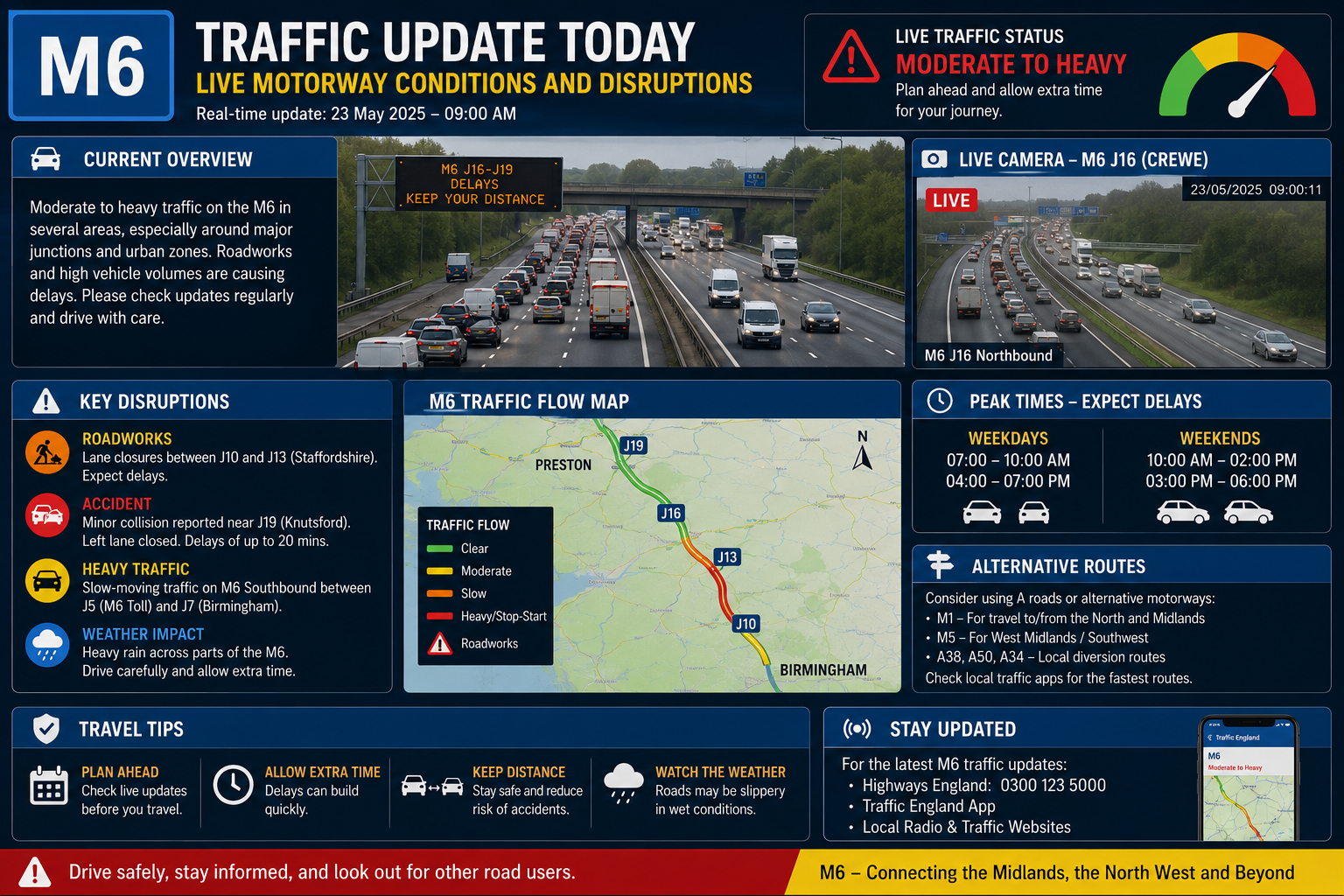
At present, M6 traffic is experiencing moderate to heavy flow in several key sections, particularly near major junctions and urban intersections. The most affected areas include stretches around Birmingham, Preston, and Warrington, where commuter traffic merges with long-distance freight movement. During morning and evening peak hours, congestion increases significantly due to high commuter dependency on the motorway. In addition, minor lane restrictions in some segments have slowed down the overall traffic speed. Drivers are advised to expect delays ranging from 10 to 30 minutes depending on the route. Despite these disruptions, the motorway remains open and operational, with traffic management teams actively monitoring flow and implementing measures to reduce bottlenecks.
Major Causes of M6 Traffic Disruptions
There are several key factors contributing to ongoing M6 traffic disruptions. One of the primary reasons is road maintenance work, which is frequently scheduled to improve motorway safety and infrastructure quality. While necessary, these works often result in temporary lane closures or reduced speed limits. Another major factor is traffic accidents, which can quickly lead to long queues and extended delays, especially in high-density zones. Heavy goods vehicles also play a significant role in slowing down traffic, as the M6 serves as a major freight corridor across the UK. Weather conditions such as heavy rain, fog, or strong winds further worsen visibility and road safety, leading to cautious driving and reduced speeds. Combined, these elements create a dynamic traffic environment that changes throughout the day.
Peak Hour Traffic Trends on the M6
M6 traffic patterns are heavily influenced by peak travel times, particularly during weekday mornings between 7:00 AM and 10:00 AM, and evenings between 4:00 PM and 7:00 PM. During these hours, commuters traveling to and from major cities like Manchester, Birmingham, and Stoke-on-Trent significantly increase congestion levels. School runs, office commutes, and freight schedules overlap, creating dense traffic flow. Weekend traffic also sees spikes, especially during holiday seasons or major public events. Drivers often experience stop-and-go conditions during peak hours, with reduced average speeds across several segments. Planning travel outside these peak windows can significantly improve journey times and reduce stress on the road.
Accident Hotspots and Safety Concerns
Certain sections of the M6 are more prone to accidents, which directly impacts M6 traffic conditions. Junctions with high merging activity, such as those near urban centers, are particularly vulnerable. Sudden braking, lane switching, and high-speed differentials often contribute to collisions. Additionally, fatigue among long-distance drivers can increase the likelihood of incidents, especially during nighttime travel. When accidents occur, emergency response teams act quickly to clear the road, but even minor incidents can cause significant traffic build-up. Authorities continuously monitor these hotspots using CCTV and traffic sensors to improve safety and reduce disruption times. Drivers are encouraged to maintain safe distances and adhere to speed limits to minimize risk.
Roadworks and Planned Maintenance Updates
Regular road maintenance is another key contributor to M6 traffic changes. Planned upgrades include resurfacing, bridge repairs, barrier replacements, and smart motorway enhancements. While these works are essential for long-term safety and efficiency, they often result in temporary lane closures and reduced speed limits. Some sections operate under controlled traffic management systems during construction phases, which can slow down movement but help maintain overall flow. Advance notice of roadworks is usually provided, allowing drivers to plan alternative routes or adjust travel times. Staying informed about scheduled maintenance is crucial for avoiding unexpected delays on the M6.
Weather Impact on M6 Traffic Flow
Weather conditions have a significant impact on M6 traffic, particularly during winter months and periods of heavy rainfall. Rain reduces tire grip and increases stopping distances, leading drivers to reduce speed. Fog can severely limit visibility, especially in rural sections of the motorway, causing cautious driving behavior and slower traffic movement. Strong winds are another concern, particularly for high-sided vehicles such as trucks and vans, which may be more difficult to control. In extreme cases, sections of the motorway may experience temporary closures or reduced speed limits to ensure driver safety. Real-time weather monitoring plays an important role in managing traffic flow and issuing timely alerts.
Freight and Commercial Traffic Influence
The M6 is a critical route for commercial transport, carrying thousands of freight vehicles daily. This heavy goods traffic significantly influences overall M6 traffic conditions, particularly during weekdays. Lorries and delivery trucks often travel at consistent but slower speeds compared to passenger vehicles, which can create natural bottlenecks in busy sections. Freight schedules are typically optimized to avoid peak commuter hours, but overlap still occurs due to the volume of goods movement across the country. This constant flow of commercial traffic ensures economic connectivity but also adds pressure to the motorway system, especially near industrial hubs and logistics centers.
Alternative Routes and Diversion Advice
When M6 traffic becomes heavily congested, drivers often seek alternative routes to save time. Depending on the destination, routes such as the A roads or parallel motorways like the M1 or M5 may offer temporary relief from congestion. However, alternative routes can also become busy during peak periods, so careful planning is necessary. Navigation apps and live traffic updates provide real-time suggestions based on current road conditions. Local diversions are sometimes introduced during accidents or roadworks, guiding drivers through nearby towns and secondary roads. While these alternatives may increase travel distance, they often help avoid long delays on heavily congested sections of the M6.
Future Improvements and Smart Traffic Management
The future of M6 traffic management is closely linked to technological advancements and infrastructure improvements. Smart motorway systems, real-time monitoring, and AI-based traffic prediction tools are being implemented to enhance flow efficiency. These systems allow dynamic speed control, lane management, and instant incident detection, reducing response times during disruptions. Long-term infrastructure upgrades aim to expand capacity and improve safety standards across the motorway. As these developments continue, M6 traffic conditions are expected to become more stable and predictable, benefiting both commuters and commercial drivers.
Conclusion
M6 traffic remains a dynamic and constantly changing aspect of UK road travel. As one of the busiest motorways in the country, it experiences a combination of congestion, roadworks, weather impact, and heavy freight movement. Understanding these factors helps drivers make informed decisions and plan journeys more effectively. While delays are sometimes unavoidable, ongoing improvements in infrastructure and traffic management systems are steadily enhancing the overall driving experience. Staying updated with live M6 traffic information is the best way to ensure safer, faster, and more efficient travel on this vital motorway.