
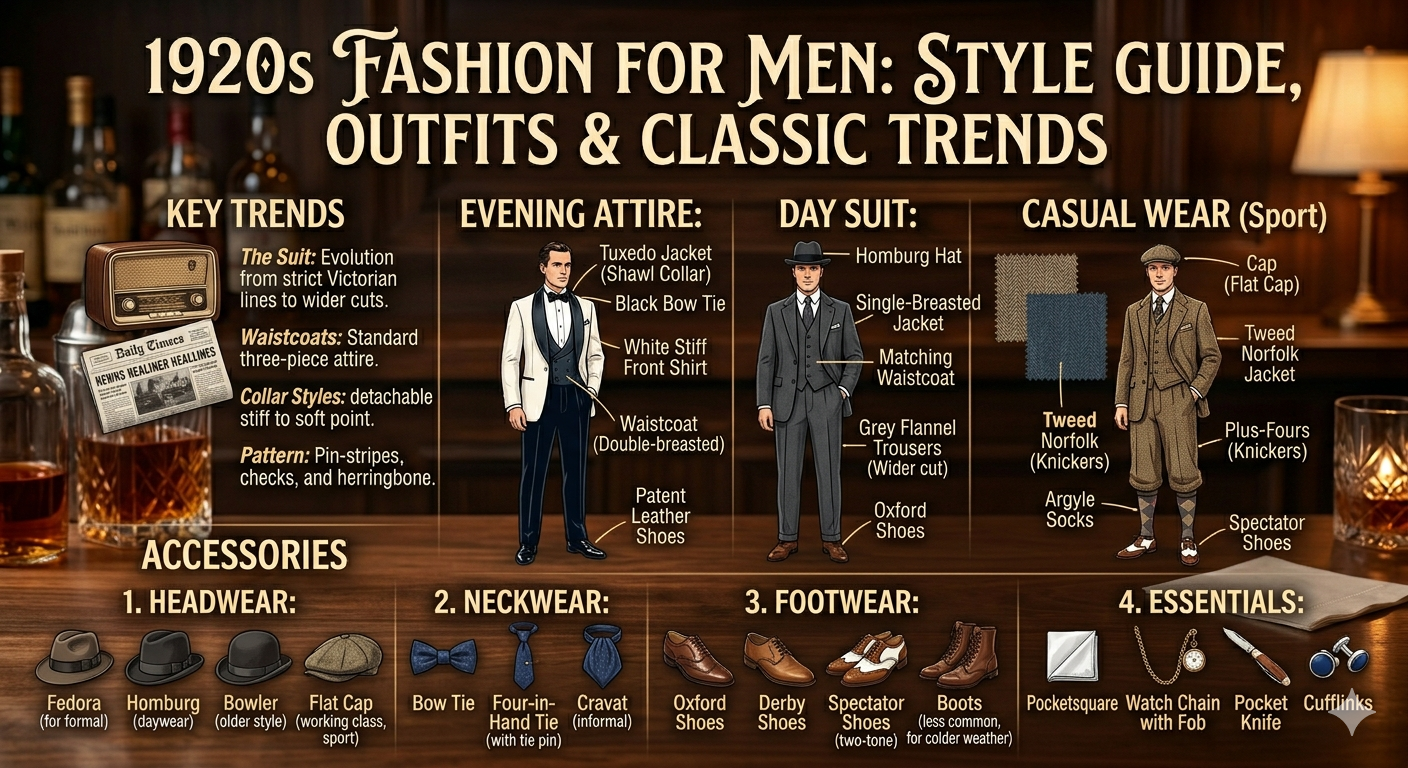
Introduction to 1920s Fashion for Men
The 1920s fashion for men represents one of the most transformative eras in modern menswear history. Often called the “Roaring Twenties,” this decade marked a major shift from the rigid, formal Victorian and Edwardian styles toward a more relaxed yet still highly elegant approach to dressing. Men’s clothing became more structured in tailoring but lighter in construction, reflecting social change, economic growth, and evolving cultural attitudes after World War I.
During this period, fashion was heavily influenced by jazz culture, Hollywood cinema, and the rise of modern consumer society. Men began to express individuality through clothing while still maintaining a polished and sophisticated appearance. Suits remained essential, but fabrics, cuts, and accessories evolved significantly. Understanding 1920s fashion for men is not just about clothing—it is about understanding a lifestyle centered around refinement, leisure, and social identity.
This era also introduced the concept of “dressing for occasion,” where men wore specific outfits for business, leisure, sports, and evening events. The versatility of menswear expanded, creating a foundation for many modern fashion trends we still see today.
The Evolution of Men’s Suits in the 1920s
One of the most defining aspects of 1920s fashion for men was the evolution of the suit. Unlike the heavy, stiff suits of the previous decades, 1920s suits became more comfortable and stylish while still maintaining structure and elegance.
Suits in this era typically featured high-waisted trousers, often held up with suspenders rather than belts. Jackets were more fitted but still allowed ease of movement. The popular styles included single-breasted and double-breasted jackets, often with wide lapels and padded shoulders to create a strong masculine silhouette.
Wool was the most common fabric, especially in cooler climates, while lighter fabrics like linen were used in warmer regions or summer seasons. Patterns such as pinstripes, checks, and subtle plaids became increasingly popular, adding personality to otherwise formal attire.
Color also played an important role. While dark tones like navy, charcoal, and black remained standard for formal wear, lighter shades such as beige, tan, and light gray gained popularity for daytime and casual suits. This diversification of suit styles marked a major shift in how men approached everyday dressing.
Shirts, Collars, and Underlayers
Shirts in the 1920s were typically simple yet elegant, serving as the foundation of a man’s outfit. Most shirts were made of cotton or linen and featured stiff detachable collars, which were a hallmark of the era. These collars came in different styles, including pointed, rounded, and wingtip designs, each suited for specific occasions.
A key feature of 1920s men’s shirts was their neutral color palette. White was the most common, but soft shades of blue, cream, and light stripes were also widely used. Unlike modern shirts, cuffs were often detachable or heavily starched, contributing to a crisp and formal appearance.
Undershirts were also commonly worn for comfort and hygiene, as they helped absorb sweat and extend the life of outer garments. Layering played an essential role in achieving the polished look that defined 1920s fashion for men. Even casual outfits were carefully constructed to maintain a neat and structured appearance.
Trousers and the Rise of High-Waisted Style
Trousers in the 1920s underwent a significant transformation, becoming wider, higher-waisted, and more comfortable compared to earlier decades. This design shift was both practical and stylistic, allowing men greater freedom of movement while maintaining a sharp silhouette.
High-waisted trousers were typically worn with suspenders, which were hidden beneath waistcoats or jackets. Belts were less common during this period and were often considered less formal. The trousers featured a straight or slightly tapered leg, sometimes with cuffs at the bottom to add weight and structure.
Pleats were also introduced in many designs, giving extra room around the hips and thighs. This made trousers more comfortable for everyday wear while maintaining elegance. Fabric choices included wool for formal wear and lighter materials like cotton for summer outfits.
The overall effect of 1920s trousers was a balanced silhouette that complemented the structured upper body created by jackets and waistcoats. This harmony between top and bottom clothing became a signature feature of men’s fashion during the decade.
Waistcoats and Layered Elegance
Waistcoats, also known as vests, played an important role in 1920s fashion for men. They were a key element in achieving the layered, refined look that defined the era. Almost every formal or semi-formal outfit included a waistcoat, adding depth and structure to the overall appearance.
Waistcoats were typically made from the same fabric as the suit or in complementary materials for contrast. They featured buttons down the front and sometimes included small pockets for pocket watches, which were still commonly used during the early part of the decade.
One of the most iconic elements of waistcoat fashion was the pocket watch chain, which extended from a buttonhole to a pocket. This accessory symbolized sophistication and attention to detail.
In less formal settings, patterned waistcoats became popular, especially those with subtle stripes or textured fabrics. This allowed men to express personality while still maintaining a polished look. The waistcoat was essential in bridging the gap between formal and casual menswear during the 1920s.
Outerwear and Seasonal Style
Outerwear in the 1920s was both functional and stylish, designed to complement the tailored suits worn underneath. Coats were typically long, reaching below the knee, and featured structured shoulders and wide lapels.
One popular style was the overcoat, often made from heavy wool for winter use. These coats came in neutral tones such as gray, brown, and black, making them versatile for formal and casual settings. Another common style was the trench coat, which gained popularity for its practicality and military influence.
For more casual occasions, men also wore shorter jackets such as tweed sports jackets. These were often paired with contrasting trousers, creating a more relaxed yet still fashionable look.
Outerwear in the 1920s was not just about protection from the weather—it was an extension of personal style. Even coats were tailored carefully to maintain the clean, structured silhouette that defined men’s fashion during this era.
Accessories That Defined the Era
Accessories played a crucial role in 1920s fashion for men, often serving as subtle indicators of wealth, profession, and personality. One of the most iconic accessories was the hat. Men rarely left home without wearing one, and styles such as fedora hats, bowler hats, and newsboy caps were extremely popular.
Ties were another essential accessory, often worn as neckties or bow ties depending on the occasion. Patterns such as stripes, polka dots, and geometric designs were widely used, adding character to otherwise simple outfits.
Pocket watches, cufflinks, tie pins, and walking canes were also common. These items were not merely decorative; they reflected social status and attention to detail. Even gloves were frequently worn, especially in formal settings.
Shoes also played a significant role in completing the outfit. Oxford shoes and two-tone brogues were popular choices, often polished to perfection. The combination of these accessories helped define the refined and complete look of 1920s men’s fashion.
Casual Wear and Sports Influence
While formal wear dominated much of 1920s fashion for men, casual clothing also began to gain importance during this decade. The rise of leisure activities such as golf, tennis, and seaside vacations influenced more relaxed styles.
Knitted sweaters, cardigans, and polo shirts became popular for informal occasions. These garments allowed for comfort while still maintaining a sense of style. Plus-fours, a type of baggy knee-length trousers, were commonly worn for sports like golf.
Casual blazers and tweed jackets also became fashionable outside formal settings. These pieces often featured earthy tones and textured fabrics, reflecting a more relaxed approach to menswear.
This shift toward casual fashion marked an important turning point in clothing history, as men began to embrace versatility in their wardrobes. The influence of 1920s casual wear can still be seen in modern smart-casual fashion today.
Cultural Influence on 1920s Men’s Fashion
The fashion of the 1920s was deeply influenced by cultural and social changes happening across the world. The end of World War I brought a sense of relief and optimism, which was reflected in more expressive and relaxed clothing styles.
Hollywood also played a major role in shaping men’s fashion. Film stars became style icons, influencing how men dressed both on and off screen. Jazz culture further contributed to the era’s bold and expressive aesthetic, especially in nightlife fashion.
Economic growth during the decade allowed more men to access fashionable clothing, expanding the reach of tailored menswear beyond the elite class. At the same time, technological advancements in textile production made clothing more affordable and widely available.
All of these factors combined to create a unique fashion identity that was both traditional and modern, structured yet expressive.
Legacy of 1920s Fashion for Men
The influence of 1920s fashion for men continues to be felt in modern style today. Many elements from this era, such as tailored suits, waistcoats, and structured silhouettes, remain staples in formal menswear.
Modern designers often draw inspiration from 1920s aesthetics, especially in luxury and vintage-inspired collections. The emphasis on craftsmanship, layering, and attention to detail continues to shape how men’s clothing is designed and worn.
Even in contemporary fashion, the balance between elegance and comfort introduced in the 1920s remains highly relevant. Whether in formal suits or casual smart wear, the legacy of this decade is still visible.
Ultimately, 1920s fashion for men represents more than just clothing—it reflects a cultural shift toward individuality, sophistication, and modern identity that continues to influence fashion over a century later.