
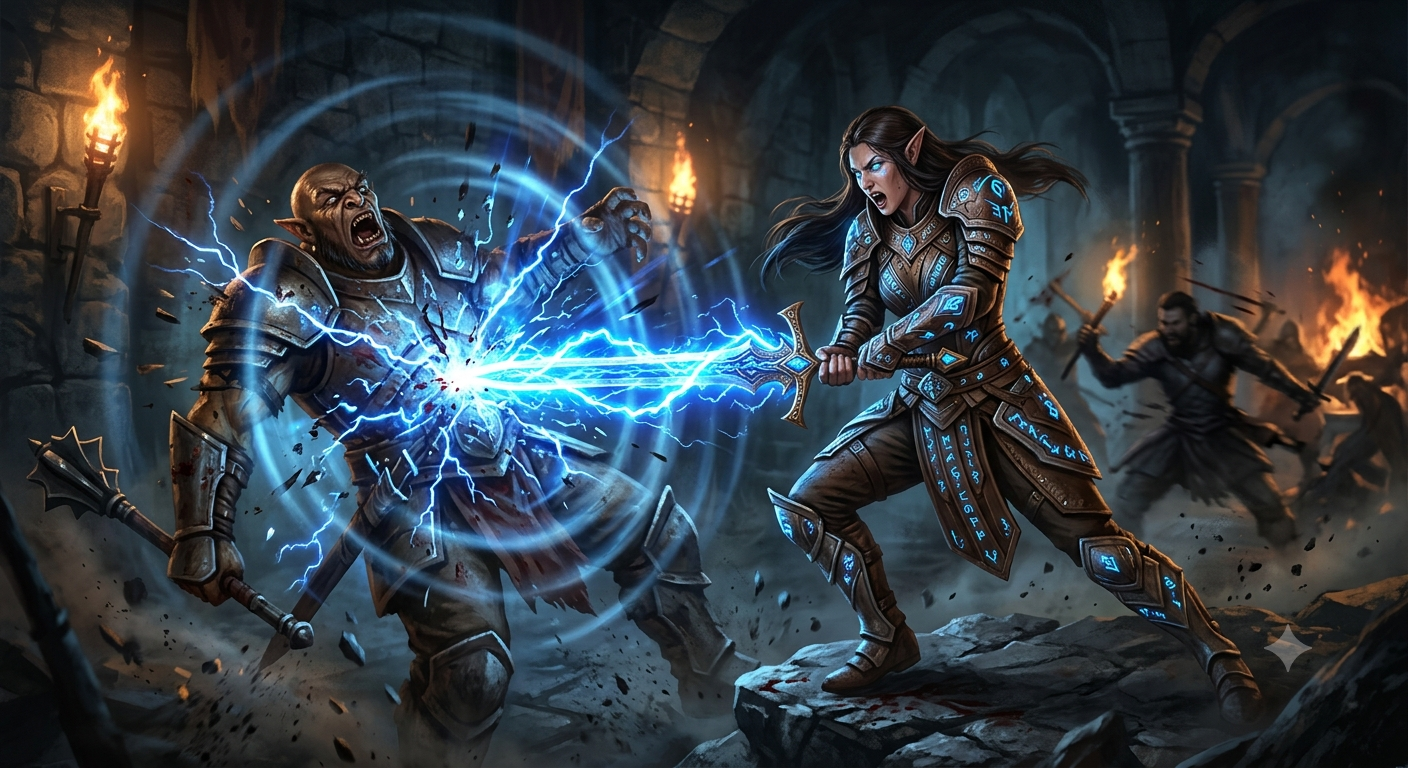
Booming Blade D&D 5e What is it
Booming Blade is a popular combat cantrip in Dungeons & Dragons 5th Edition that combines melee weapon assaults with elemental thunder magic. It’s for spellcasters that wish to continue to be effective in close combat without having to be locked into standard weapon classes. Booming Blade: When you cast this spell, you make a melee attack as part of the casting. If the target moves after the attack, it takes extra thunder damage.
This spell is particularly nice because it allows characters to scale their damage in a manner that is not like conventional weapon assaults. Booming Blade doesn’t just do damage, it creates a tactical position where movement is dangerous for foes. This makes it a very potent control and damage tool both in early and late game.
Players typically use Booming Blade while creating hybrid characters, such as gish builds, where spellcasting and melee combat are efficiently integrated.
How Booming Blade Works in Combat
Booming Blade is a spell effect that occurs during a melee attack action. When you cast this spell you make a melee weapon attack against a target within range. When it hits successfully, the target takes the usual damage of the weapon plus the additional thunder damage based on the character’s level.
If the target freely moves before the start of the caster’s next turn, then the secondary effect occurs. If so, victim suffers additional thunder damage as a penalty for mobility.
This mechanic makes positioning very crucial. Enemies are sometimes left with the choice of either receiving extra damage or standing still. This gives the spell a huge tactical edge for players.
Booming Blade isn’t a normal attack spell. It’s a weapon skill with a magical boost, making it unique among cantrips.
Booming Blade Rules and Core Mechanics
The rules for Booming Blade are simple yet require close attention to detail. The spell includes a melee weapon assault as part of casting. That means it can’t be delivered at range, it has to be delivered in close combat.
In many circumstances, the spell replaces the Attack action, especially when used by classes that rely on cantrips rather than multiple attacks. At higher levels, Booming Blade increases the added thunder damage dealt on impact and on movement.
It is worth noting that the harm from movement will only occur if the target moves of their own volition. The impact is not triggered by forced movement (pushed or pulled).
Another essential criterion is that the spell has a verbal and somatic component, so you can’t always use it while a character is mute or restrained.
How the Booming Blade Damage Scaling Works
Booming Blade has one of the strongest features in its ramping damage. While normal weapon strikes just get more attacks per turn, Booming Blade gets more damage as the caster levels up.
At low levels, the spell adds a little thunder damage to the initial hit. This damage scales with the character to a point where it competes with other attack features.
Movement also scales for secondary damage, making foes think twice about moving. This establishes a layered damage system where players have immediate as well as possible next-turn advantage over the opposition.
This scaling logic makes it such that Booming Blade is always useful, whether it’s low level engagements or high level boss fights.
Best Booming Blade Classes
Booming Blade is best for classes that blend melee and spellcasting. The Sorcerer is one of the best users, more so if they go for melee-oriented builds.
The Warlock class also gets a lot of love, especially when coupled with skills that provide you more control effects or boost your melee strikes. Wizards with martial subclasses or multiclass builds can likewise make good use of Booming Blade.
Another good possibility is rogues since Booming Blade works nicely with sneak attack techniques. The spell is a single weapon attack so can trigger sneak attack damage when circumstances are satisfied, making it incredibly effective in some configurations.
In general, any class that combines mobility, placement and spellcasting can benefit from Booming Blade.
Tactical Combat Uses of Booming Blade
Booming Blade isn’t just a harm spell, it’s a control spell. One of its primary tactical functions is to prevent movement by the enemy. Casting the spell on a target makes enemies make hard decisions about where to stand.
It’s especially beneficial in choke spots or tight battlefields with limited movement choices. Enemies attempting to reposition or escape risk suffering more thunder damage.
Another tactical use is hit-and-run fighting. Characters can attack with Booming Blade, then move away, forcing adversaries to remain in position or take damage if they follow.
This makes it a very good tool for defensive and strategic playstyles.
Booming Blade Synergies and Combos
Booming blade is a very good synergy with powers that buff single big attacks. For example, Rogue Sneak Attack works well with it, as the spell counts as a single weapon strike.
Abilities that improve movement control or decrease enemy mobility also pair nicely. When an enemy is delayed or restrained, they are less likely to trigger secondary damaging effect, giving the caster even more control.
Booming Blade gets more potent with magical artefacts that enhance melee attacks or boost spell damage.
The idea is that when paired properly, Booming Blade is not just a single spell, but a component of a more complex tactical system.
Common Errors in Booming Blade
One of the biggest ones is employing Booming Blade and without thinking about location. The spell requires the enemy to move in order to deal more damage hence bad positioning can make the spell less effective.
Another error is to think it functions like a standard multi-attack ability. Booming Blade is meant to be used once, not multiple times.
Players also sometimes forget that forced mobility doesn’t proc secondary damage. This results in miscalculations in battle strategy.
Being aware of these limits is important for the efficient use of the spell.
Booming Blade vs Other Cantrips
Booming Blade is frequently likened to other melee cantrips such as Green-Flame Blade. Both improve melee assaults but Booming Blade is more about penalising movement while Green-Flame Blade spreads damage to neighbouring enemies.
Booming Blade is often better in circumstances when single target control matters. It pushes opponents to make tactical decisions, which might disrupt their strategy.
Green-Flame Blade, on the other hand, is superior at fighting several adversaries at once.
The decision between the two is based on the player’s build and combat style.
Final words about Booming Blade
Booming Blade is arguably one of the most versatile and strategically powerful cantrips in Dungeons & Dragons 5e. It mixes melee fighting with magic damage, and has a new mechanism that rewards clever positioning and tactical thinking.
The ramping damage, synergy with a variety of classes, and great control potential make it a desirable pick for many character builds. When utilised properly it may put enemies in bad spots and has a huge impact on the outcome of conflicts.
For any player who enjoys tactical warfare and mixing it up with spells throughout the game, Booming Blade is a must-have and extremely useful.