
Introduction to Snow Warning in the UK
A snow warning is issued when weather authorities expect significant snowfall that may disrupt daily life, travel, and public safety. In the United Kingdom, snow warnings are taken seriously due to their impact on roads, rail networks, airports, and essential services. When a snow warning is announced, it usually indicates that cold air masses are moving in, bringing the possibility of heavy or persistent snowfall across certain regions.
In recent years, snow warnings have become more precise due to improved forecasting technology. The UK Met Office regularly monitors atmospheric conditions to predict when and where snow is likely to fall. These warnings help residents and travelers prepare in advance, reducing risks associated with icy roads, power cuts, and transport delays.
Understanding how snow warnings work and which areas are affected is essential for staying safe during winter weather events. This article provides a detailed overview of snow warnings, including forecasts, affected regions, and travel guidance.
What a Snow Warning Means for Residents
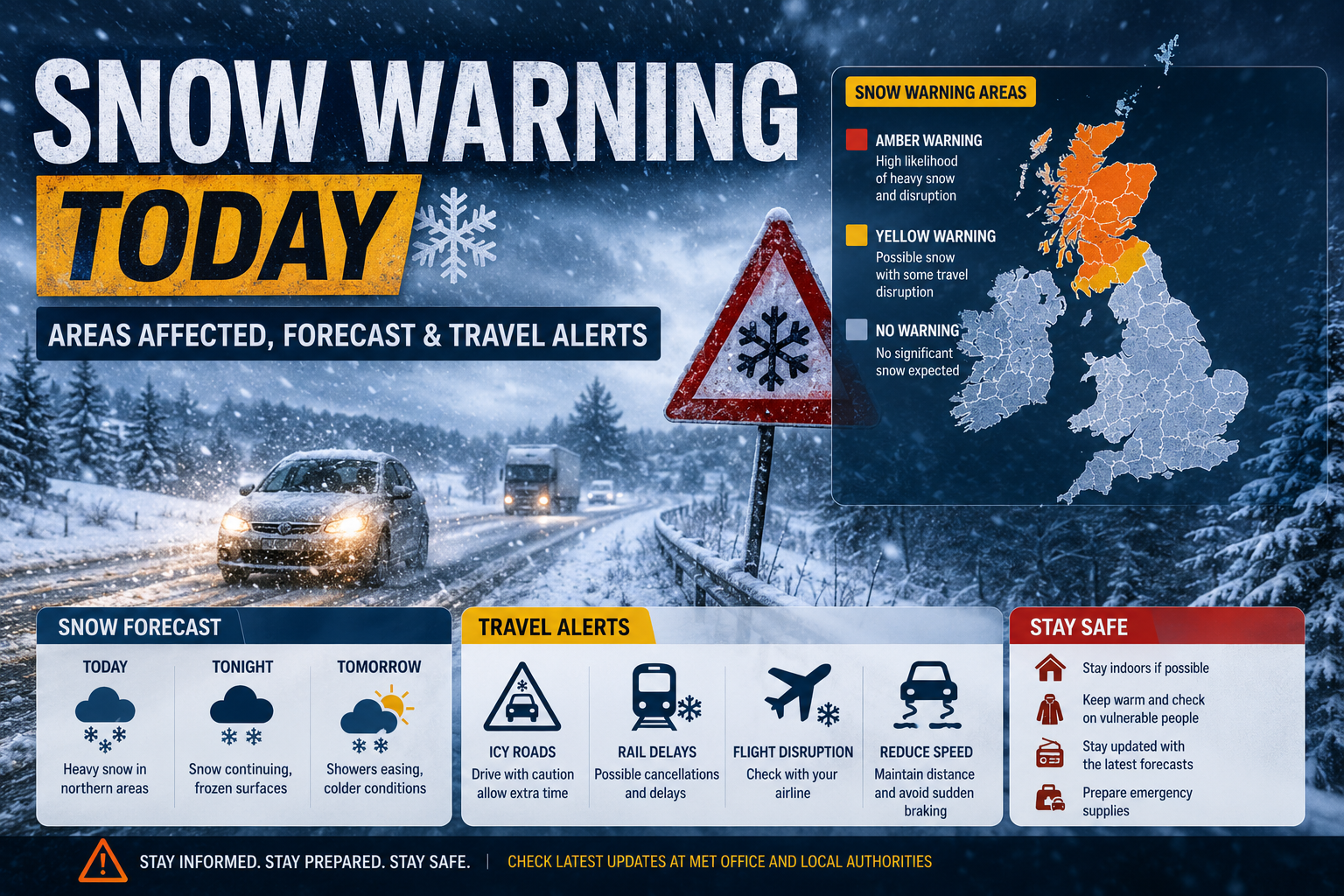
A snow warning in the UK is part of a structured weather alert system that categorizes weather risk levels into yellow, amber, and red warnings. Each level indicates the severity and potential disruption expected from snowfall.
A yellow snow warning typically suggests low to moderate impact, such as light travel delays or minor disruptions. An amber warning means a higher risk, with possible road closures, power outages, and significant travel disruption. A red warning is the most severe and indicates dangerous weather conditions that could pose a risk to life.
For residents, a snow warning means preparation is key. People are advised to check weather updates regularly, avoid unnecessary travel, and ensure they have essential supplies such as food, heating, and emergency equipment. Schools and businesses may also be affected depending on the severity of the warning.
Areas Most Affected by Snow Warning in the UK
Snow warnings in the UK do not affect all regions equally. Certain areas are more prone to heavy snowfall due to geographical location and elevation. Northern England, Scotland, and parts of Wales often experience the most significant snowfall events.
Scotland, in particular, is frequently under snow warnings during winter months, especially in highland areas where temperatures drop significantly. The Pennines in northern England also experience heavier snow due to their elevation. Rural and inland areas are typically more affected than coastal regions, which benefit from slightly milder temperatures.
Urban centers such as Manchester, Birmingham, and London may also experience snow warnings, but snowfall in these areas is often less intense. However, even light snow can cause major disruption in cities due to high traffic volume and limited winter infrastructure.
How Snow Forecasting Works in the UK
Snow forecasting in the UK is carried out using advanced meteorological models that analyze temperature, humidity, air pressure, and wind patterns. The UK Met Office uses satellite data, radar systems, and computer simulations to predict when and where snow is likely to fall.
Snow forms when atmospheric temperatures are low enough for precipitation to freeze before reaching the ground. Forecasting snow is complex because small changes in temperature can determine whether an area receives rain, sleet, or snow.
Meteorologists also track weather fronts and cold air masses coming from the Arctic or continental Europe. These systems often bring the most significant snow events to the UK. Forecast accuracy has improved significantly, allowing warnings to be issued earlier and with greater confidence.
Travel Disruptions Caused by Snow Warning
One of the biggest impacts of a snow warning is disruption to travel networks across the UK. Roads can become icy and dangerous, leading to accidents and closures. Motorways and rural roads are especially vulnerable during heavy snowfall.
Rail services are also affected, with delays and cancellations common during snow events. Tracks can freeze, and switches may fail to operate correctly. Airports may experience flight delays or cancellations due to poor visibility and runway conditions.
Public transport systems in cities may also slow down significantly, affecting daily commuters. As a result, authorities often advise avoiding unnecessary travel during active snow warnings.
Safety Measures During Snow Warning
When a snow warning is issued, safety becomes the top priority for individuals and communities. People are encouraged to stay indoors as much as possible during severe weather conditions. If travel is necessary, it is important to check road conditions and allow extra time for journeys.
Keeping warm is essential, especially in regions where temperatures drop below freezing. Homeowners are advised to ensure heating systems are working properly and to stock up on essential supplies.
Emergency services also prepare for increased demand during snow events. Local councils may deploy gritters on roads to reduce ice formation and improve safety for drivers and pedestrians.
Impact of Snow Warning on Daily Life
Snow warnings can significantly disrupt daily life across the UK. Schools may close, businesses may switch to remote working, and public events may be canceled or postponed. Grocery stores often experience increased demand as people prepare for staying indoors.
Power outages can also occur during heavy snowfall, especially if snow accumulates on power lines or trees fall due to weight. This can affect heating systems and communication networks, making preparation even more important.
Despite these disruptions, snow events are also seen as part of UK winter culture, often bringing communities together and creating scenic winter landscapes.
Climate Factors Behind Snow Warning Events
Snow warnings are closely linked to broader climate patterns affecting the UK. Cold air masses from the Arctic, known as polar vortex events, can significantly increase the likelihood of snowfall. Similarly, easterly winds from continental Europe can bring freezing conditions across the country.
Climate change has also influenced snowfall patterns, making them less predictable in some cases. While overall winters may become milder, extreme cold events can still occur, sometimes resulting in sudden and intense snow warnings.
Understanding these climate factors helps meteorologists improve forecasting accuracy and helps the public better prepare for winter weather conditions.
How to Stay Updated During Snow Warning
Staying informed is one of the most important steps during a snow warning. The UK Met Office provides real-time updates through its website, mobile apps, and social media channels. Local news outlets also provide region-specific updates on road closures, school announcements, and travel disruptions.
Weather apps can send alerts directly to smartphones, ensuring that people receive timely warnings. Checking updates frequently helps individuals make safer decisions about travel and daily activities.
Being proactive rather than reactive during snow warnings can significantly reduce risks and improve safety outcomes.
Conclusion on Snow Warning in the UK
Snow warnings in the UK are essential weather alerts that help protect lives, reduce disruption, and improve preparedness during winter conditions. While snow can create beautiful landscapes, it also brings challenges that affect transportation, infrastructure, and daily routines.
Understanding what a snow warning means, which areas are affected, and how to respond can make a significant difference in staying safe during winter weather events. With improved forecasting technology and better communication systems, the UK continues to enhance its ability to manage snow-related risks effectively.